
How Often to Sealcoat a Driveway in Southwest Florida
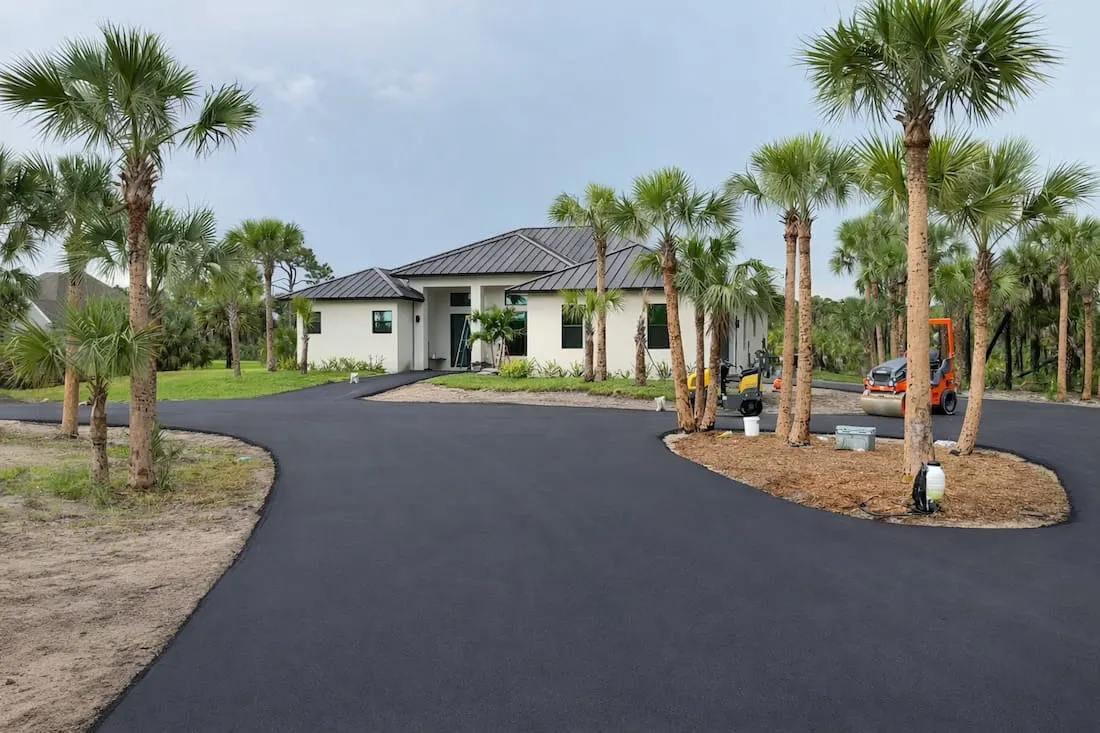
A common starting interval for an asphalt driveway in Southwest Florida is a fresh coat of sealer every 2 to 3 years. That is a starting point, not a rule. Sun, traffic, standing water and the shape of the last coat decide whether your driveway in Naples or nearby is ready sooner or can wait longer. If you want a closer look at the process, see our page on driveway sealcoating.
Start with the surface, not the calendar
Sealcoat is a thin protective layer over the asphalt. It slows the damage from sun, water and oil, but it wears away over time like paint on a deck. A calendar cannot tell you how much is left, so walk the driveway and read the surface.
Fresh sealer is a deep, even black. As it wears, the surface may look increasingly gray. Look for worn paths where tires roll every day, and for patches where the coat has gone thin while the rest still looks fine. Thin spots are where the asphalt is most exposed.
Here is a quick way to read what you see:
| What you see | What it usually means |
|---|---|
| Deep, even black with a slight sheen | The coat is intact. No rush. |
| Even gray fading across the whole drive | The coat is aging. Start planning the next one. |
| Light gray, rough texture, loose stone at the surface | The coat is mostly gone. The asphalt is exposed. |
| Worn tracks at the turn or near the garage, rest still dark | Wear is uneven. Ask whether the whole drive needs a coat or the worn areas need attention first. |
| Cracks, soft spots or crumbling edges | Sealer alone may not be the answer. Repairs come first. |
What changes the sealcoating interval
Three things that can affect the schedule are: how the driveway is used, how the weather hits it, and how the last coat was put down.
Traffic and turning
A driveway with one car pulling straight in may experience less traffic-related wear. A drive where several vehicles turn, park and back out every day can wear faster, especially at the apron and any tight turn, because turning tires scrub the surface. Heavier vehicles add to that. If your driveway sees constant turning, lean toward the shorter end of the range.
Sun and standing water
Strong sun can dry out the binder, the sticky part of asphalt that holds the stone together, and the surface may turn brittle and gray. Water that sits on the driveway after rain works against the coat as well. Low spots that hold puddles often show wear and cracking before the rest of the drive does, so note where water collects.
The condition of the last coat
A new coat only performs as well as what it bonds to. If the last application went over dirt, oil stains or loose material, it may have worn out early. Before sealing again, the surface should be cleaned, and cracks should be filled. If you do not know how the last coat was applied, that is worth telling whoever looks at the driveway.
Plan around Southwest Florida weather
Gulf Coast summers usually run long and humid, with frequent afternoon rain from roughly June into the fall. That matters because sealer needs a dry surface to go on and dry weather afterward to cure, meaning to harden into a durable film. Many crews wait 24 to 48 hours before letting cars on a fresh coat, and a damp or rainy stretch can stretch that out.
October can still bring wet weather in this part of Florida, while November is often drier. That makes late fall a reasonable time to look at your driveway and book work, but check the forecast for the actual days. A dry week in October beats a wet week in November.
If you live in Naples, Bonita Springs or Marco Island, plan around what your property does, not only the month. A driveway under open sky may dry faster and takes more sun. A drive shaded by trees dries slower and may stay damp in the morning. If your lot is flat and water lingers after storms, give extra time for the surface to dry out before any work.
Check the driveway and choose a next step
You can do a preliminary visual check with no tools. Walk the whole surface, not just the part near the garage.
- Note faded areas, worn tire paths and places where the coat looks thin.
- Mark spots where water stands after a rain.
- Look for cracks and crumbling edges, and note how wide they are.
- Think back to when the last coat went on and whether anyone prepared the surface first.
If the surface is gray but sound, scheduling residential sealcoating is usually the right call. If you see wide cracks, soft spots or loose edges, ask for an assessment first, because sealer alone may not address unrepaired damage. Our overview of sealcoating covers what the work involves.
We offer a Free Estimate, which you can request before deciding on timing.
Common questions
How often should a driveway be sealcoated?
Many homeowners start with every 2 to 3 years and adjust from there. A busy driveway with lots of turning or standing water may need it sooner, while a lightly used one may wait longer.
Should I sealcoat a brand new asphalt driveway right away?
Usually not. New asphalt often needs time to cure before it takes sealer, so ask your contractor how long to wait for your driveway.
When does asphalt need another coat of sealer?
It may be time when the surface has faded to gray, feels rough, or shows worn tracks where the coat has thinned. Cracks should be repaired before the new coat goes on.
Areas we serve
Our services
Have a question about your project? Call (239) 206-6561